What the Supreme Court Actually Said on Community Dogs, and What It Did Not

The recent Supreme Court order on stray and community dogs has triggered exactly the kind of reaction many feared. In WhatsApp groups, housing colonies, campuses, and comment sections, people are now repeating a dangerous shorthand: the Supreme Court has said dogs can be removed or worse, the Supreme Court has said dogs can be killed.
That is not a small misunderstanding. It is the kind of misunderstanding that gets animals displaced, abused, and illegally eliminated by people who think the law is now on their side.
So let us be clear.
The Supreme Court’s 19 May 2026 judgment is serious, far-reaching, and in important respects deeply troubling for animal advocates. It upholds the removal of stray dogs from certain “institutional” and high-footfall spaces, and permits euthanasia in limited cases involving dogs that are rabid, incurably ill, or demonstrably dangerous or aggressive, subject to law and veterinary assessment. But it does not order the killing of all stray dogs. It does not scrap the Animal Birth Control framework. And it does not give any private citizen, resident welfare association, or local strongman the right to start displacing or harming dogs at will.
That distinction matters. A lot.
What the Court did say
The Court held that dogs removed from certain institutional or sensitive areas such as schools, hospitals, airports, sports complexes, railway stations, and bus terminals cannot be released back into those same spaces after sterilisation. Instead, they are to be relocated to shelters or other designated facilities. It also upheld the Animal Welfare Board of India’s SOPs, directed States and Union Territories to strengthen implementation, required at least one functional ABC centre in every district, and ordered adequate availability of anti-rabies vaccines and immunoglobulin in government medical facilities.
The Court also said authorities may take legally permissible measures, including euthanasia, in cases involving dogs that are rabid, incurably ill, or demonstrably dangerous/aggressive, but only subject to veterinary assessment and in accordance with the Prevention of Cruelty to Animals Act, 1960 and the Animal Birth Control Rules, 2023.
It also framed the issue in Article 21 terms, saying the “right to live with dignity” includes the right to live without the threat of dog attacks, and that the State cannot remain a passive spectator where preventable threats to human life persist.
Those are the broad holdings. They are consequential. They deserve scrutiny.
What the Court did not say
It did not direct a general cull of street dogs.
It did not abolish the ABC Rules.
It did not declare that any dog anywhere may now be removed, relocated, or killed because someone finds it inconvenient, frightening, or unwelcome.
The judgment itself continues to operate within the framework of the ABC Rules, 2023. In fact, it explicitly directs stronger infrastructure for sterilisation and vaccination, and nationwide compliance monitoring. SCC Online framed the ruling as one that “strongly affirm[ed] the framework enshrined in the ABC Rules, 2023,” while also taking note of governments’ failure to implement it properly.
That matters because some of the most alarming media and social-media takes reduce a complicated, flawed ruling into one line: remove the dogs. That is exactly the sort of cherry-picking now putting animals at risk.

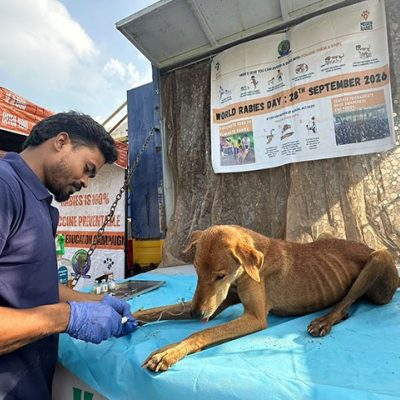
Picture Credit: Anipixels.com
Why many animal advocates see this ruling as unscientific
The problem is not only that the judgment is harsh. It is that parts of it clash with the logic of the ABC system itself.
The larger three-judge bench of the Supreme Court had previously recognised, in August 2025, that the ABC Rules offered a solution that was “scientifically carved out” and “compassionate.” That modified order directed compliance with the ABC Rules, including release of dogs back to the same area from which they were picked up after recovery from sterilisation, deworming, and vaccination.
That is not accidental. It is how ABC works.
Street dogs live in territories. Stable, sterilised, vaccinated dogs occupying a territory prevent the vacuum effect that follows removal. When dogs are displaced, new unsterilised dogs move in. Conflict rises. Breeding continues. Vaccination coverage collapses. The problem is not solved. It is moved around, and often made worse. The AWBI handbook and the ABC framework are built on this logic.
So yes, this is where animal advocates are right to push back. If the law and the science of ABC require sterilise, vaccinate, recover, and return, then a judicial move toward non-release in broad classes of spaces creates a serious contradiction. It risks undoing exactly what the ABC Rules were designed to achieve.
The real scandal is not that dogs exist. It is that the State failed
Even media coverage that took a hard line on public safety still acknowledged the same basic fact: governments have failed to build the infrastructure the law requires.
Hindustan Times reported that the Court itself said sterilisation and vaccination drives had taken place “without planning” and that had States acted “with due foresight, the present situation would not have assumed such alarming proportions.” It also reported the Court’s warning that non-compliance with its directions could invite contempt proceedings, disciplinary action, and tortious liability. Source
NDTV similarly highlighted the Court’s criticism of governments for the “discernible absence of efforts to expand and quantify infrastructure in proportion to increasing population of stray dogs,” noting that sterilisation and vaccination remained “sporadic” and poorly planned.
The Times of India reported that the Court pulled up States and Union Territories for the lack of sustained effort and quoted the bench saying that prolonged inaction and absence of institutional commitment had aggravated the problem to a point requiring “urgent and systemic intervention.”
Exactly.
This crisis did not emerge because dogs were fed.
It did not emerge because compassionate citizens cared too much.
It emerged because sterilisation, vaccination, waste management, rabies control, shelter standards, data systems, and local enforcement were not implemented at the scale required.
When the State fails to fund ABC and ARV properly, then blames the dogs, that is not policy. That is scapegoating.
Why cherry-picked reporting is so dangerous
Some reports foregrounded “euthanasia” and “removal” because those are the most dramatic lines. They make for sharper headlines. They also make for worse public understanding.
For example, Hindustan Times highlighted that authorities could take “legally permissible measures, including euthanasia in case of rabid and dangerous dogs.” NDTV led with the Court’s refusal to recall its earlier order removing stray dogs from public places. The Times of India stressed the Court’s permission for euthanasia of rabid, incurably ill, or demonstrably dangerous dogs. None of these reports invented those points. But when those lines circulate stripped of the rest, the public hears only one thing: permission.
But the same ecosystem often gives far less attention to the parts that matter just as much: one ABC centre in every district, anti-rabies availability, High Court monitoring, the continuing relevance of the ABC Rules, and the fact that euthanasia remains limited, regulated, and not a free-for-all.
That imbalance is not harmless. It creates the public impression that cruelty has legal cover.
It does not.
What Mrs Maneka Gandhi urged, and why it still matters
In her message and transcript circulated after the ruling, Mrs. Maneka Gandhi urged people not to respond with panic but with organisation. “At such times, it is important not to react with panic or emotion, but with unity, clarity, and organisation.” She also warned: “Please counter all the rumours, edited videos, or misinformation circulating online. Stick to facts. Understand the law carefully. Act responsibly and peacefully at all times.”
In the transcript, she made a parallel point. “Nothing else has changed, nothing. So don’t get panicky.” She stressed the need for shelters, ABC centres, training, rapid response, and factual coordination on the ground. Whether or not one agrees with every part of her interpretation, her central warning is sound: if animal advocates do not organise around law, facts, and local infrastructure, panic and misinformation will fill the vacuum.
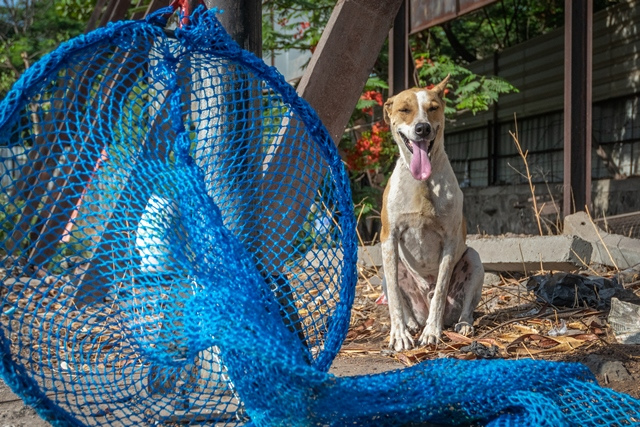
Pic Credits: anipixels.com
What the public should understand now
If someone tells you, “The Supreme Court has said dogs can be displaced or killed,” the answer is this:
No. The Court has issued a troubling order that permits relocation from certain institutional areas and allows euthanasia in narrowly defined legal circumstances. But it has not authorised indiscriminate killing, random displacement, or mob action. The ABC Rules still matter. The PCA Act still matters. Veterinary protocol still matters. Law still matters.
And if someone wants safer communities, there is already a science-based answer: ABC and ARV done properly, at scale, with public-health seriousness.
That means:
- catch, sterilise, vaccinate, recover, and where the law provides, return
- district-level ABC infrastructure
- anti-rabies access in hospitals
- proper data
- waste management
- trained municipal response
- humane public education
- accountability for governments, not revenge on animals
Across India, the organisations doing this work are not shouting from television studios. They are catching dogs, sterilising them, vaccinating them, rescuing the injured, treating bite-risk cases responsibly, and building the only long-term solution that actually works.
That is where public support should go.
Not into fear.
Not into vigilantism.
Not into illegal displacement.
Into ABC. Into ARV. Into law. Into compassion with backbone.
Across India, grantees supported by Help Animals India are doing the work that actually reduces suffering and conflict: sterilising, vaccinating, rescuing, treating, and caring for community animals. If you want a humane, effective response rooted in science and law, please help fund ABC and ARV work on the ground.
👉 Support humane dog population management. Donate Now!
Frequently Asked Questions (FAQs) about the Hon'ble Supreme Court Verdict
1) Did the Supreme Court order the killing of all stray dogs in India?
No. The Court did not order a general cull of stray or community dogs. What it did say is that authorities may euthanise dogs that are rabid, incurably ill, or demonstrably dangerous/aggressive, and only within the framework of existing law and veterinary oversight. That is very different from giving blanket permission to kill dogs.
2) Did the Court ban the return of dogs after sterilisation?
Not across the board. The most controversial part of the order concerns dogs picked up from certain high-footfall or institutional areas such as schools, hospitals, bus stands, railway stations, airports, and similar public spaces. The Court upheld directions that such dogs should not be released back into those same areas after sterilisation and vaccination. This is one of the reasons animal advocates are deeply concerned.
3) What do the Animal Birth Control Rules actually require?
The Animal Birth Control Rules, 2023 are based on a clear framework: catch, sterilise, vaccinate, allow recovery, and return the dog to the area from which it was picked up. That return-to-origin principle is not incidental. It is central to how ABC is meant to work.
4) Why do animal welfare groups say relocation is wrong?
Because street dogs live in territories and social groups. When sterilised and vaccinated dogs are removed from an area, a vacuum is created. New, unsterilised dogs often move in. Fights increase, breeding continues, and vaccination coverage becomes less stable. In other words, relocation can make the problem worse instead of solving it.
5) Is this why people are calling the verdict unscientific?
Yes. The criticism is that parts of the ruling sit uneasily with the science and logic of ABC. If the legal framework is built on stabilising local dog populations through sterilisation, vaccination, and return, then large-scale non-release or relocation cuts against that model.
6) Does this judgment cancel the ABC Rules?
No. The ABC framework still exists, and the judgment itself continues to refer to sterilisation, anti-rabies measures, shelters, and State responsibility. In fact, the Court also directed stronger implementation, including functional ABC centres in every district and better access to anti-rabies vaccines and immunoglobulin.
7) Why is media coverage causing so much confusion?
Because the most dramatic parts of the order, such as removal and euthanasia, are often the most heavily reported. Those points are real, but when they are repeated without context, many people come away believing the Court has legalised broad displacement or killing of dogs. That is not what the judgment says.
8) What should the public understand right now?
People should understand three things clearly:
- The Court did not authorise indiscriminate killing of dogs.
- The ruling has serious implications, especially on relocation from institutional areas.
- The real long-term solution remains ABC and ARV done properly, consistently, and at scale.
9) What actually works to make communities safer?
What works is not panic, cruelty, or random removal. What works is:
- ABC at scale
- Anti-rabies vaccination
- Early treatment and rescue
- Better waste management
- Public-health planning
- Humane, lawful implementation
That is how suffering is reduced for both people and animals.
10) What can animal lovers and citizens do now?
They can:
- share accurate information
- push back against illegal relocation and vigilante cruelty
- support lawful ABC and ARV work
- back local rescuers, vets, shelters, and feeders acting responsibly
- hold authorities accountable for implementing the law properly
👉 Support humane dog population management. Donate Now!