From Nepal floods to stopping the Dog Meat Trade, and everything in between
This has been quite a month; not for us, but for the animals, and for the organisations working every day to reach them. Floods in Nepal and Assam. Dogs rescued from the meat trade. Elephants relearning what it means to be free. A monkey who escaped his enclosure and decided to stay anyway. A team that walked for twelve days through broken terrain and is already planning to go back.
This newsletter covers it all. We hope it gives you a sense of what your support makes possible.
Dog Meat Trade: Two Rescues. Forty-Three Survivors.
In Assam, the dog meat trade continues, illegally and relentlessly. Dogs are packed into vehicles on the streets of Assam and transported toward markets in Nagaland and Mizoram, despite the trade being banned since 2020. Most never make it back.
Just Be Friendly (JBF), a Help Animals India grantee based in Guwahati, has been fighting this trade for years. In less than a month, they have carried out two major interceptions.
On 24 August, 29 dogs were rescued from a trade route in Assam and transported to JIRAW, JBF's rehabilitation facility in Guwahati. They are receiving treatment and ongoing care.
On 15 September, police intercepted 15 more dogs at Dillai, Karbi Anglong, while they were being transported toward Dimapur, Nagaland. Fourteen survived. One did not. The 14 survivors were transported nearly 250 kilometres overnight, arriving at JIRAW at 5 AM. The JBF team, led by founder Dr Sashanka, was waiting for them.
All 43 dogs from both rescues are now at JIRAW. They are receiving medical treatment, nourishment, and the beginning of a long rehabilitation process. Most arrived in severe trauma. For each of them, JIRAW is the first safe place they have ever known.
The trade is illegal. It continues. And JBF continues to fight it, one rescue at a time.
Nepal Floods: What Happened, and What Our Grantees Did
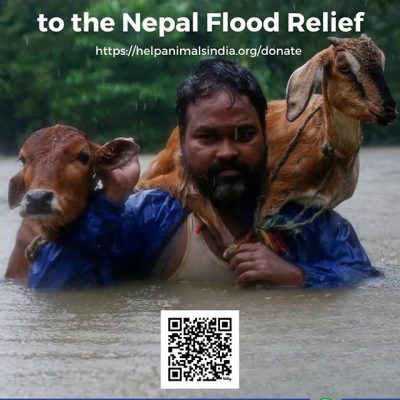
On 26 August, a snow-rock landslide on the Nepal-China border caused the Lhende River to burst its banks, unleashing a glacial flood through the districts of Rasuwa and Nuwakot. What followed was one of the worst monsoon disasters in Nepal's recent history. Over 1,100 people have died. Nearly 5,000 are still missing. Entire communities were swept away or cut off. And alongside the human toll, unaccounted for and uncounted, thousands of animals were stranded, injured, and left without care.
Three Help Animals India grantees responded on the ground.
Sneha's Care, Nuwakot and Rasuwa
The Sneha's Care team spent twelve consecutive days in the field: six days in Nuwakot, six in Rasuwa. They walked throughout the day and worked until nine or ten at night, pushing into communities that were difficult to reach even before the floods destroyed the roads.
In the high-altitude areas, they found a crisis that the news cycle had not caught up with. Donkeys, mules, yaks, and other animals had survived the floods; but the food supplies around them had not. Many animals urgently need food, salt, and mineral supplements just to stay alive. They endured the disaster. They should not now struggle simply because there is nothing left to eat.
The team has returned briefly to rest. They are planning to go back as soon as they have the funding to do so. Help Animals India is standing with them.
Animal Nepal, Betrawati Bazar, Rasuwa
In Betrawati Bazar in Rasuwa, the dogs and cats are still there. The communities that cared for them are not.
The floods erased entire communities in many parts of Rasuwa. The people who fed these animals, who gave them a place in the neighbourhood, are displaced or gone. For the animals left behind, the disaster did not end when the water receded; it continued into the silence that followed.
The Animal Nepal team carried out welfare and health checks on the dogs and cats remaining in the area, identified those needing further support, and left food and veterinary supplies with Sun Bahadur Tamang, a local veterinary technician, so that care can continue on the ground after the team moves on. Everything around these animals has changed. But they have not been forgotten.
Magic Marble Foundation, Trishuli, Nuwakot
Magic Marble Foundation (MMF) has been coordinating with the Nepal Veterinary Association (NVA) and local government officials since the earliest days of the response. They planned and executed the first organised relief supply deployment to the Trishuli area of Nuwakot, delivering water, food, hygiene supplies, wound-care materials, medicines, and animal feed to communities hit by the floods. Supplies for both humans and animals. Because in a disaster, the need does not distinguish.
Access remains the single biggest obstacle every team is facing. Roads in much of the affected region are washed away or blocked. Where roads still exist, MMF is moving. Where they do not, the team finds another way in. A larger follow-up deployment focused on medical supplies, clean water, and emergency animal care is already being planned
The crisis that came after the floods
The high-altitude districts of Nuwakot and Rasuwa are home to communities that depend on their animals in the most direct way. Donkeys and mules carry loads. Cattle provide milk and Yaks provide fibre. These animals are not incidental to the lives around them; they are central to them.
When the floods came, many survived. What followed was almost as difficult. The disaster destroyed food supplies. Salt licks are gone. Mineral supplements, essential for animals recovering from extreme stress, are nowhere to be found. There is still so much work to be done. Many donkeys, mules, yaks, and other animals in the affected areas such as abandoned pets urgently need food, salt, and mineral supplements. In some places, the animals simply cannot survive. It is heartbreaking to see them survive such a terrible disaster and then struggle because there is so little available for them to eat.
These are the stories of just a few. Thousands more did not have someone coming for them. Our grantees are trying to reach as many as they can.
Rs. 470
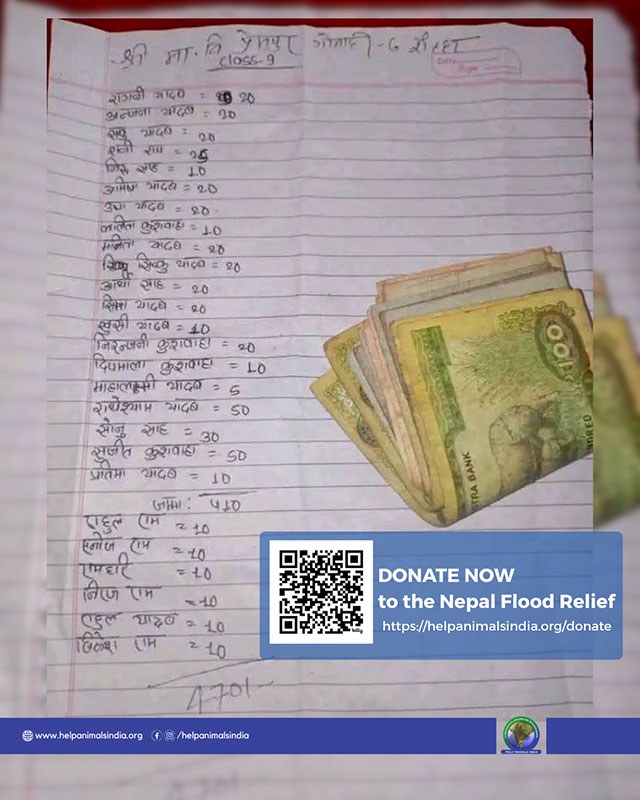
Twenty-six Class 9 students from Shree Secondary School in Prempur, Rautahat, collected between Rs. 10 and Rs. 50 each and donated the total, Rs. 470, to Nepal's Prime Minister's Disaster Relief Fund.
Rs. 470. From 26 teenagers (about $3.00). Who decided that what they had was worth giving.
There is nothing more to add to that.
She Is Settling Down
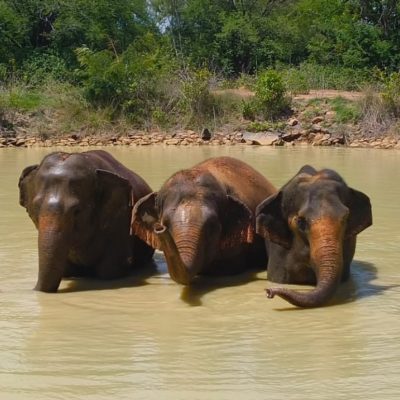
When Hema first arrived at the Wildlife Rescue and Rehabilitation Centre (WRRC)'s Elephant Care Facility in Bangalore, over a year ago, she kept largely to herself. That is not unusual for elephants coming out of captivity. Trust takes time. Hema is doing better now. She has started socialising more, spending time with the other elephants at the facility in a way she simply was not doing when she came in. It is not a dramatic change. It is something quieter than that: an animal beginning to feel safe. The WRRC ECF is a Help Animals India grantee, run in partnership with the Karnataka Forest Department. This is what their work is.
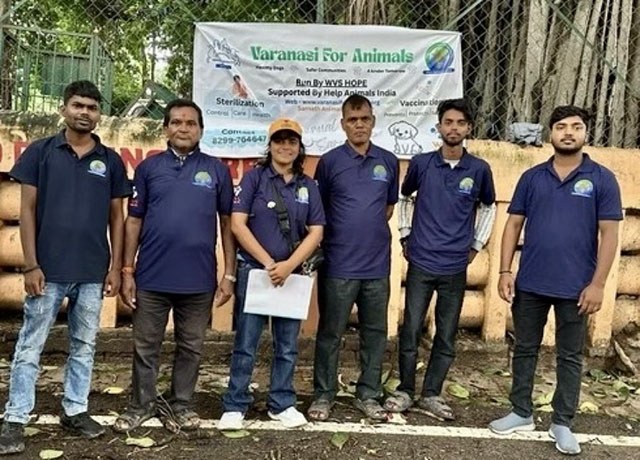
Sarnath: The Annual Sterilisation and Vaccination Camp
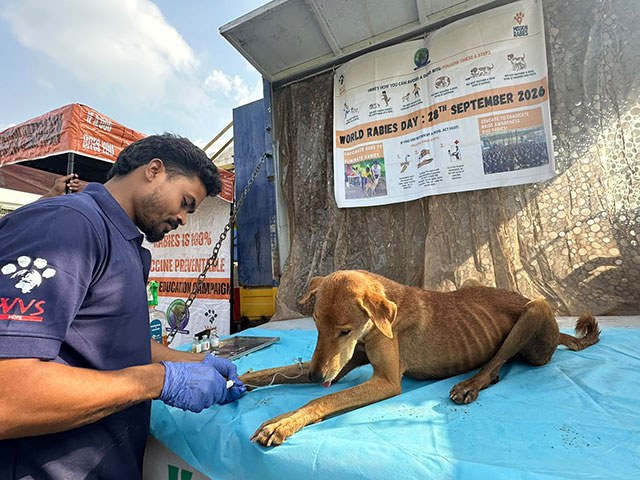
On 26 September, Sarnath Animal Welfare, a Help Animals India project, launched its annual sterilisation and vaccination camp for community dogs in the Sarnath area of Varanasi. The camp runs in partnership with Fondation Brigitte Bardot and WVS Hope.
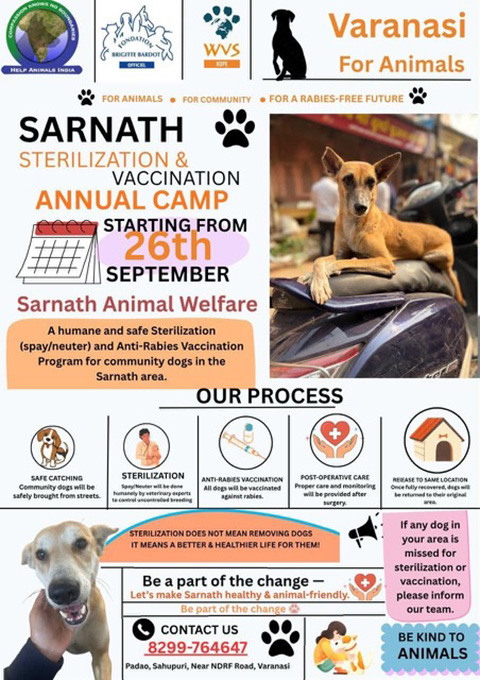
The program is straightforward in principle, and significant in impact. Community dogs are safely caught from the streets, sterilised by veterinary professionals, vaccinated against rabies, given post-operative care, and returned to their original location once they have recovered. Every dog that goes through the programme is one fewer unplanned litter on the streets of Sarnath. Every anti-rabies vaccination is one step closer to making the area rabies-free.
Sterilisation does not remove dogs from their communities. It gives them a healthier, longer life within them; and it gives the communities they live alongside a safer, more manageable relationship with street dogs.
This is the most proven intervention in street dog welfare. It works best when it is done consistently, year after year, in the same areas.
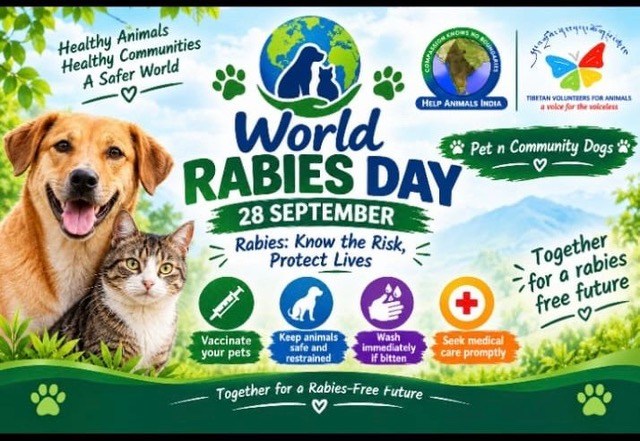
World Rabies Day: 28 September
28 September is World Rabies Day. Rabies kills tens of thousands of people and countless animals every year in India, and it is entirely preventable.
Rinchen Lhaze keeps going and helping as he can as one of Help Animals India's grantee program recipients. For each dog vaccinated, the chain of transmission shortens. Sterilisation and anti-rabies vaccination, done consistently, in the same communities, year after year, is how this disease gets beaten.
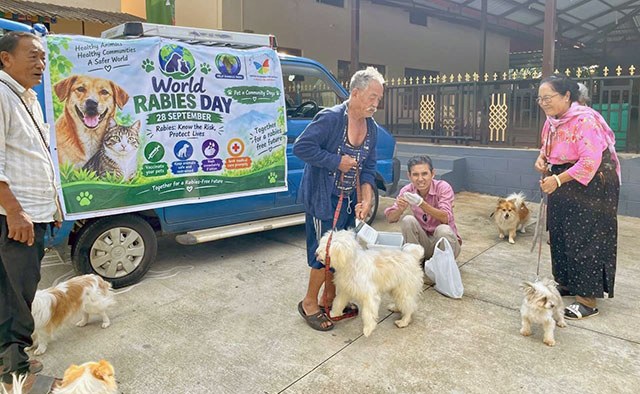
And here is Rinchen going to the communities to give vaccinations, and next is spay/neuter as some of the female dogs are abandoned in the forest after giving birth as no one can take care of them. We want to help them do animal birth control in this area as well!
But it's difficult for Rinchen of Tibetan Volunteers for Animals to go to each camp and takes many hours and petrol too. But he keeps going around while dogs need their help!
All our grantees are doing exactly that. Please support their work!
Where It Began: Varanasi for Animals
For years before Varanasi for Animals existed, people kept writing to HAI founder Eileen Weintraub. They had visited Varanasi, seen injured dogs with no one to help them, donkeys and cattle dying by the roadside, and essentially no rescue infrastructure anywhere in the city. They asked her to do something.
In 2010, she went to see for herself.
She met Praveen Ohal, who was already running an animal welfare organisation in Ranchi. During that first visit, the two of them rescued a puppy together.
They started with a single room in an abandoned railway building. When the local administration refused to fund sterilisation surgeries, Eileen paid for them herself. Help Animals India later committed to financing the permanent clinic that followed.
That was 2010. This is what grew from it.
They have been carrying out Animal Birth Control work across Varanasi.
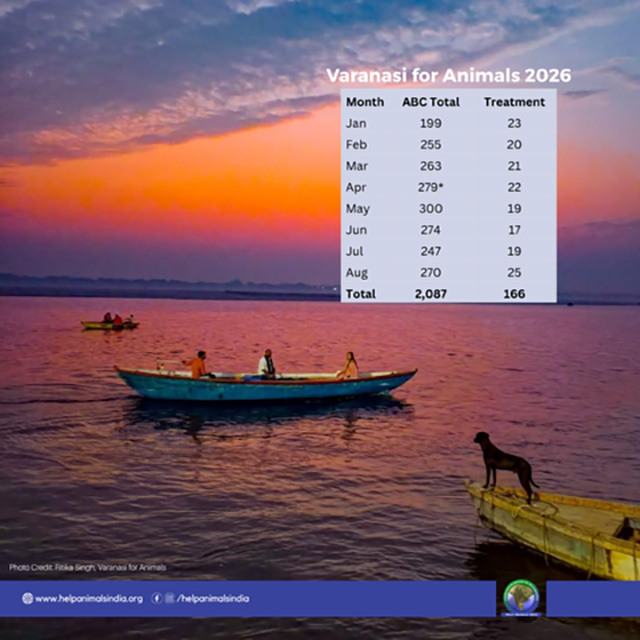
And since 2019, VFA has sterilised over 26,000 dogs total (3,487 + 3,050 + 9,095 + 2,150 + 3,109 + 2,688 + 2,612 = 26,191, plus 2026 ongoing) and many other rescues!
This is what sustained, unglamorous, essential work looks like. Not always dramatic rescue (though those happen to often also), but thousands of quiet interventions that add up to cities and towns where animals have a better chance.
Will You Help?
Everything in this newsletter, the flood response, the rescues, the rehabilitation, the surgeries, the sanctuaries, runs on donations. Every contribution goes directly to the organisations doing this work.
Thank you for reading, and for caring. The animals cannot thank you. But the teams on the ground, exhausted, muddy, and going back anyway, know that none of what they do is possible without the people who believe it matters.
With gratitude,
The Help Animals India Team